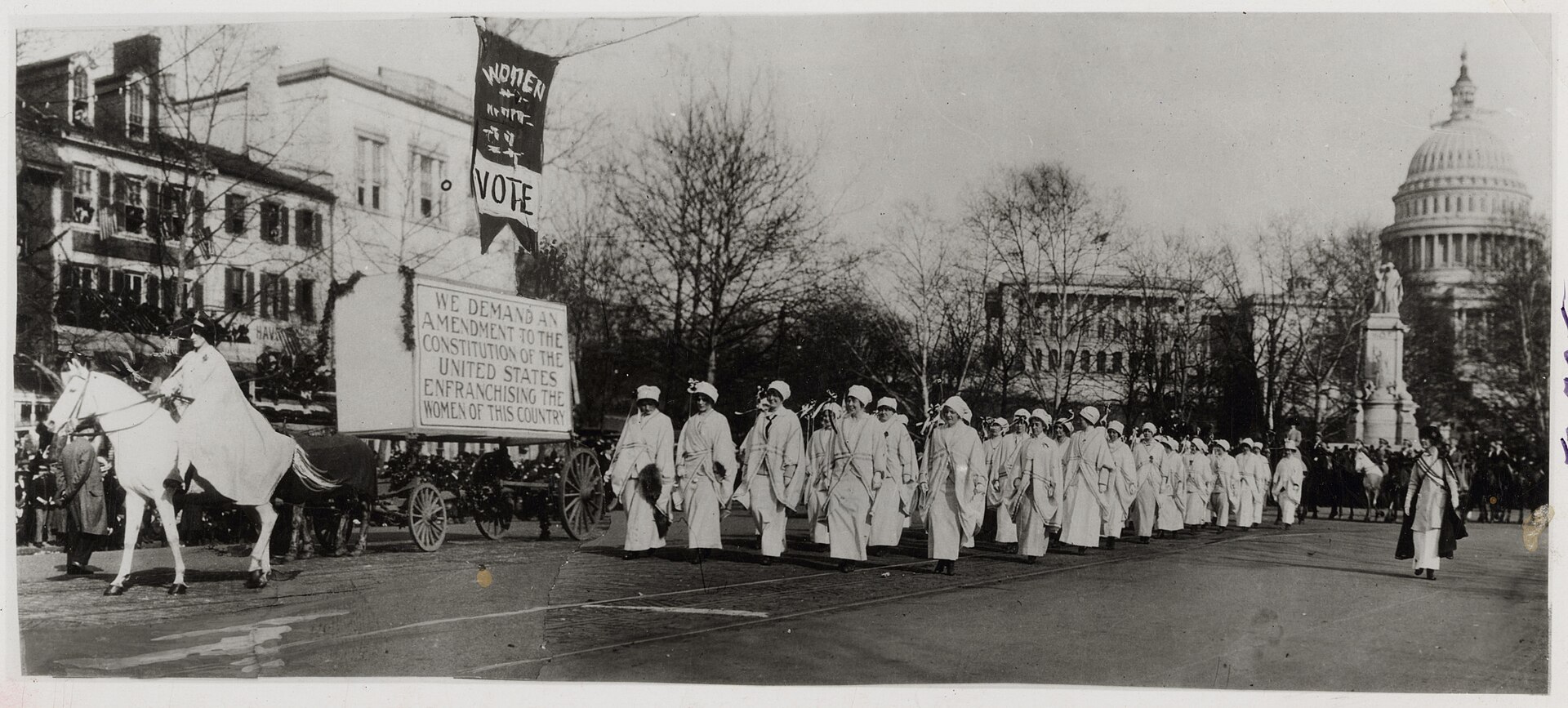
The Nineteenth Amendment is often described as the moment American women won the vote. That captures a historic breakthrough, but the complete story is more complicated. The amendment prohibited the United States and the states from denying or abridging the right to vote on account of sex. It did not erase every other restriction on voting, and it followed decades of organizing, legal battles, and disagreement.
The amendment was certified on August 26, 1920, after Tennessee became the thirty-sixth state to ratify it on August 18. The dates are related but not identical. Understanding the path to ratification also explains why some women had voting rights before 1920 and why many others still faced barriers afterward.
Before 1920: voting rights varied by state
The original Constitution did not establish universal adult suffrage. States set most voter qualifications, subject to constitutional limits that developed over time. Women in some western states and territories gained voting rights before the Nineteenth Amendment; Wyoming Territory granted women suffrage in 1869, for example, and some other jurisdictions followed. Other states retained restrictions based on sex.
Women’s voting-rights advocacy drew on arguments about equal citizenship, representation, taxation, and the meaning of democratic government. It also encountered opposition from people who defended traditional gender roles, feared changes to politics, or opposed federal intervention in state election rules. The movement itself was not uniform in tactics, priorities, or inclusion.
From Seneca Falls to a national campaign
The 1848 women’s rights convention at Seneca Falls, New York, is a major landmark in the organized movement, although it was not the beginning of all women’s rights activism. The convention’s Declaration of Sentiments demanded expanded rights, including suffrage. Later organizations pursued state-by-state campaigns, a federal constitutional amendment, or both.


Organizers such as Susan B. Anthony, Elizabeth Cady Stanton, Lucy Stone, Ida B. Wells-Barnett, Mary Church Terrell, Alice Paul, and Carrie Chapman Catt made different contributions across generations. Some emphasized lobbying and coalition building; others used parades, demonstrations, picketing, and civil disobedience. African American suffragists often had to confront racism within the movement while also challenging broader systems of racial exclusion.
The 1913 march and the Silent Sentinels
On March 3, 1913, a major suffrage procession took place in Washington, D.C., the day before Woodrow Wilson’s inauguration. The event drew attention to a federal amendment. Beginning in 1917, the National Woman’s Party’s Silent Sentinels picketed the White House. Protesters were arrested; some imprisoned suffragists undertook hunger strikes and faced harsh treatment. The tactics and government response became part of the national debate.
The United States’ participation in World War I also shaped public arguments about citizenship and democracy, although historians disagree about how much weight to assign particular wartime factors relative to decades of organizing.
How Congress and the states approved the amendment
Congress passed the proposed amendment in June 1919. Under Article V of the Constitution, an amendment requires approval by three-fourths of the states after proposal by the required congressional supermajorities. With 48 states in the Union, 36 ratifications were necessary. Tennessee supplied the thirty-sixth on August 18, 1920. Secretary of State Bainbridge Colby certified adoption on August 26.


The amendment’s central sentence is concise: the right to vote cannot be denied or abridged by the United States or any state on account of sex. Congress also received power to enforce it by appropriate legislation. The text does not create an unconditional right to vote free from every other election qualification.
Why the victory was not equally accessible to all women
Many Black women in the South continued to face poll taxes, literacy tests, intimidation, and discriminatory election administration under Jim Crow. Native Americans faced citizenship and state-law barriers; the Indian Citizenship Act of 1924 did not immediately eliminate all state restrictions. Asian immigrant women also encountered citizenship and naturalization laws that limited eligibility. Puerto Rican women and women in other U.S. jurisdictions followed different legal and political paths.
Later legal changes—including the Voting Rights Act of 1965—addressed important forms of racial discrimination in voting. The Nineteenth Amendment was a landmark constitutional rule, but it did not by itself guarantee equal practical access to the ballot.
What the amendment changed—and what it did not
Established fact: The amendment barred voting restrictions based on sex and was ratified in 1920. It changed the constitutional limits on federal and state election laws.
Historical interpretation: Scholars debate the relative importance of protest tactics, political parties, wartime pressures, and state campaigns. Those are questions of historical explanation rather than disagreements about the ratification dates or the amendment’s text.
For readers studying how amendments become law, compare the ratification process with No Step On Snek’s history of the original Constitution’s ratification. The site’s Sources & Methodology explains the editorial approach; this history article does not endorse a party or campaign.